
 Michael Clayton with Tom Wilkinson: Oscar ballot and the preferential voting system explained. For a movie like Tony Gilroy’s Michael Clayton or an actor like Tom Wilkinson to be shortlisted for the 2008 Academy Awards, each needs to receive at least 1/6 + 1 of the vote in their respective categories, beginning with the top choices, then second choices, and so on. More than one round of Oscar ballot-tallying – i.e., getting to second and perhaps third choices – are likely necessary for the selection of a not insignificant number of Oscar nominees.

The (nominations) Oscar ballot explained (in brief): Meet the ‘preferential voting system’
When it comes to the nominations, how does the Oscar ballot work?
How do members of the Academy of Motion Picture Arts and Sciences make their choices?
How are the eventual nominees – five in most categories – selected?
Using as his sources top people from PricewaterhouseCoopers – that’s the Academy Awards’ accounting firm – Variety’s Timothy M. Gray attempts to explain “Oscar’s enigmatic ballot” in a few paragraphs. It goes more or less like this:
When voters cast their Oscar ballot, they write down their top five choices per category according to their particular Academy branch – e.g., actors nominate actors, directors nominate directors, film editors nominate film editors, and so on. Just about everyone is allowed to vote for Best Picture.
PricewaterhouseCoopers representatives then sort out each Oscar ballot so they can figure out the five – in some special categories, three – nominees.
Key to Oscar ballot tallying
How do the PricewaterhouseCoopers people do that?
In accordance with Academy rules, they follow what’s known as the “preferential voting system.”
But what is the “preferential voting system”?
As Gray explains, one key element of the Oscar ballot tallying – and the preferential voting system – is that “the order in which you list your preferences is important. In the first round of ballot-counting, the [PricewaterhouseCoopers] honchos go through all the first choices. If your first choice winds up with a nomination [i.e., with a minimum of 1/6 + 1 of the votes in each category with five available slots], your ballot is set aside.”
Minimum & maximum + one & only choice
Why are at least 1/6 + 1 of the votes necessary for a nomination in the “regular” Oscar categories?
Because that’s the minimum number of votes allowing for a maximum of five nominees. In other words, it’s mathematically impossible to have six nominees, each with 1/6 + 1 of the total voting tally.
Why is the Oscar ballot set aside?
After the Academy member’s choice is added to the roster of nominees, their Oscar ballot is set aside because their voice has officially been heard.
That may sound like a good thing, but that also means the other four choices on each member’s ballot will be duly ignored.
Is that a good idea?
One-round voting example
Well, let’s say that 1,000 Academy members voted for this year’s Best Picture Oscar and that only one round of ballot-tallying was needed to decide the five nominees.
Let’s now say that 208 members placed No Country for Old Men as the top choice on their Oscar ballot; 208 other members chose There Will Be Blood, 208 chose Juno, and 207 chose Michael Clayton.
These four movies are all automatically nominated as they’ve received more than 1/6 + 1 [1,000 ÷ 6 + 1 = 168] of the vote.
Now, once you add up the votes for these four titles we reach a total of 831 tallied ballots. That means there are now 169 ballots left.
Lo and behold, 168 ballots have Into the Wild as their top Best Picture choice.
And we now have the Academy’s five Best Picture nominees of 2007.
But what about the remaining Oscar ballot?
That lone Academy voter opted for Joe Wright’s international box office hit Atonement as her no. 1 pick. Why? See further below.
Minority rule
Since each Oscar ballot is set aside after one choice is tallied – in the example above, the very first choice – that means each voter’s four other Best Picture selections will be completely ignored.
Once again, good idea?
Let’s say that besides the 168 Academy voters who selected Into the Wild as their top film, only another 20 included it as their second, third, fourth, or fifth choice.
Into the Wild was thus found in 188 out of 1,000 ballots.
Let’s also say that, besides its lone no. 1 vote Atonement was found in second place on 900 ballots, and in third, fourth, or fifth place on the remaining 99 ballots.
That means the romantic period drama starring Keira Knightley and James McAvoy was listed on every single Oscar ballot. It was the second choice in 90 percent of the ballots.
Even so, in the example above Atonement was not one of the 2007 Best Picture nominees, while Into the Wild – found in 812 fewer ballots – was shortlisted.
Sounds fair?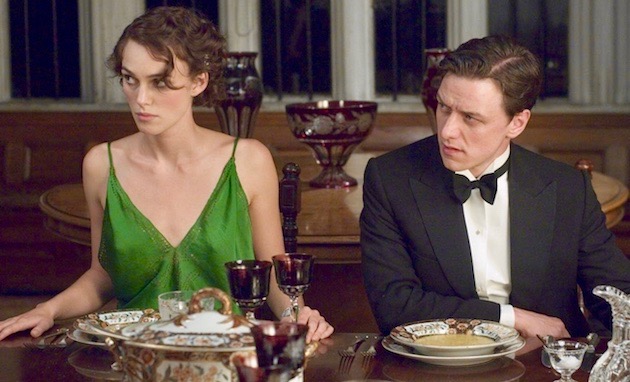 Atonement with Keira Knightley and James McAvoy: Oscar ballot choices vs. the preferential voting system. In our “Oscar ballot explained” example, Joe Wright’s Atonement fails to receive a Best Picture Academy Award nomination even though it is found – in second place – in 90 percent of the ballots. Nominated instead is the less widely – but more wildly – popular Into the Wild. (No bad pun intended.) In real life, will there be enough enthusiastic Academy (Actors Branch) voters to warrant a nomination for Keira Knightley, James McAvoy, Saoirse Ronan, Romola Garai, and veteran Vanessa Redgrave (Best Supporting Actress for Julia, 1977)?
Preferential voting system leads to surprises
Whether or not you think so, the preferential voting system helps to explain a number of surprises among the Oscar nominations.
Why?
Because a relatively small but ardent group of supporters of a film or performance or cinematographer can get their favorites – listed at the top or in second place – nominated, while a (much?) more numerous but less ardent group of voters can have their near-favorites – listed in second, third, fourth, or fifth place – “snubbed.”
And in case you’re wondering about the need for the lone no. 1 vote for Atonement, well, that’s due to an Academy rule requiring that each nominee must have topped at least one Oscar ballot.
Are Academy members aware?
Do Academy members know how their votes are tallied?
An understanding of the “Oscar ballot process” would be essential for the vote counting to be a (at least reasonably) fair representation of the members’ preferences.
For instance, do Academy voters know that only one of their five choices will be tabulated? And that most likely that’ll be either their top or second pick?
Don’t bet on it.
Is Meryl Streep The Queen of Hollywood?
Lastly, Timothy Gray’s Variety article also tells us that “PWC accountants do not penalize you for spelling mistakes or bad penmanship. But if you offer confusing information – voting for Meryl Streep in The Queen, for example – that vote is thrown out.”
In other words, Academy members shouldn’t drink (or do drugs) and vote.
They also should be able to tell the difference between the various light-haired English-speaking actresses.
Plurality takes all
Before we wrap this up, it should be noted that the Academy’s preferential voting system is not used to select the winners. On that particular Oscar ballot, Academy members make only one choice per category.
That means a movie or actor or costume designer could theoretically take home an Oscar statuette with only 1/5 + 1 of the total number of votes.
For instance, if 1,000 Academy members were to vote in the Best Picture category, No Country for Old Men would win with a mere 201 votes (1/5 + 1 of the total) – as long as There Will Be Blood received 200 votes, Juno 200 votes, Michael Clayton 200 votes, and Into the Wild 199 votes.
Silence = luster
Of course, the PricewaterhouseCoopers people have to keep their mouths shut about the final tallies.
After all, much of the Academy Awards’ luster is the result of (almost) no one knowing exactly how each Academy member fills out their Oscar ballot, or how many votes goes to a specific winner (or nominee).
Additionally, an absolute Oscar victory would look considerably less absolute if it were revealed that the win was the outcome of only a handful of (extra) votes. Perhaps even a single one. In recent years, think Little Miss Sunshine vs. The Departed, Crash vs. Brokeback Mountain, and Million Dollar Baby vs. The Aviator vs. Sideways.
Whether in regard to winners or nominees, keep this possibility in mind next time you blame the 6,000-strong Academy for the idiotic choices of perhaps no more than 600 – or 60 or 6 – members.

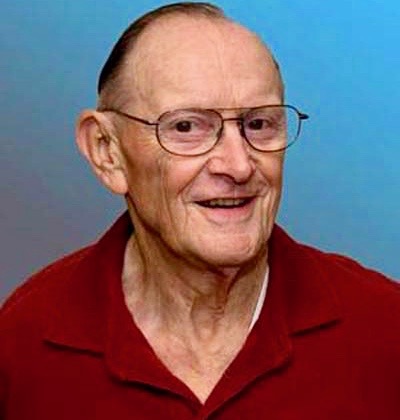 David A. Grafton: The 21st recipient of the Academy’s Gordon E. Sawyer Award for notable “technological contributions.” David A. Grafton image: © A.M.P.A.S.
David A. Grafton: Academy’s Gordon E. Sawyer Award recipient
David A. Grafton will be the next recipient of the Academy of Motion Picture Arts and Sciences’ Gordon E. Sawyer Award, “presented to an individual in the motion picture industry whose technological contributions have brought credit to the industry.”
According to the Academy’s press release, the English-born Grafton is “a pioneering designer of lenses for optical effects printers, which at the time of their development were adopted by nearly every visual effects facility in the motion picture industry.”
For more than three decades, Grafton designed electro-optical systems for IBM, NCR, EG&G, and Xerox. In the 1970s, he also worked with special effects companies such as Industrial Light & Magic and Boss Film Studios, thus contributing to the production of George Lucas’ Star Wars, Irvin Kershner’s The Empire Strikes Back, Ridley Scott’s Blade Runner, and numerous other motion pictures.
David A. Grafton has already received two of the Academy’s Scientific and Engineering Awards: in 1980, for the optical design of a telecentric anamorphic lens for motion picture optical effects printers, and in 1986, as part of the team responsible for the design and development of the Zoom Aerial 65mm Optical Printer.
Gordon E. Sawyer Award
David A. Grafton will become the 21st recipient of the Gordon E. Sawyer Award, which was first handed out in 1982.
Previous honorees include cinematographer Joseph Walker (You Can’t Take It with You, Here Comes Mr. Jordan, The Jolson Story), and visual effects artists Ray Harryhausen (The 7th Voyage of Sinbad, Mysterious Island, Jason and the Argonauts) and Linwood G. Dunn (Flying Down to Rio, Citizen Kane, the 1949 Mighty Joe Young).
The 2008 Gordon E. Sawyer Award – despite the different name, it’s an Oscar statuette – will be presented at the Scientific and Technical Awards Dinner on Feb. 9, at the Beverly Wilshire Hotel in Beverly Hills. Snippets from the ceremony, with Fantastic Four actress Jessica Alba at the helm, will be featured in the Oscar show.
Best Make-Up Oscar semifinalists: From Jack Sparrow to Edith Piaf
In other Oscar 2008 news, the Academy has announced that seven films remain in contention in the 2008 Academy Awards’ Best Make-Up category.
Titles range from big-budget Hollywood fare like Zack Snyder’s 300 and Gore Verbinski’s Pirates of the Caribbean: At World’s End to French-language fare like Olivier Dahan’s La Vie en Rose, starring Marion Cotillard as chanteuse Edith Piaf, and Julian Schnabel’s The Diving Bell and the Butterfly, in which Mathieu Amalric becomes a tetraplegic. See below.
The Diving Bell and the Butterfly
Harry Potter and the Order of the Phoenix
La Vie en Rose
Norbit
Pirates of the Caribbean: At World’s End
Sweeney Todd: The Demon Barber of Fleet Street
300
On Jan. 19, members of the Academy’s Make-Up Branch will view 10-minute excerpts from each of the seven films. Following the screenings, they will select three films for final Oscar consideration.
The 80th Academy Award nominations will be announced on Jan. 22 at 5:30 a.m. Pacific Time at the Academy’s Samuel Goldwyn Theater in Beverly Hills.
The Academy Awards ceremony will be held on Sunday, Feb. 24, at the Kodak Theatre at the Hollywood & Highland Center in Los Angeles.
Tom Wilkinson Michael Clayton image: Warner Bros.
Keira Knightley and James McAvoy Atonement image: Universal Pictures.
Amy Adams Enchanted image: Walt Disney Pictures.
“Oscar Ballot Explained + Academy Award Predictions Include Amy Adams & Tom Wilkinson” last modified in September 2018.