
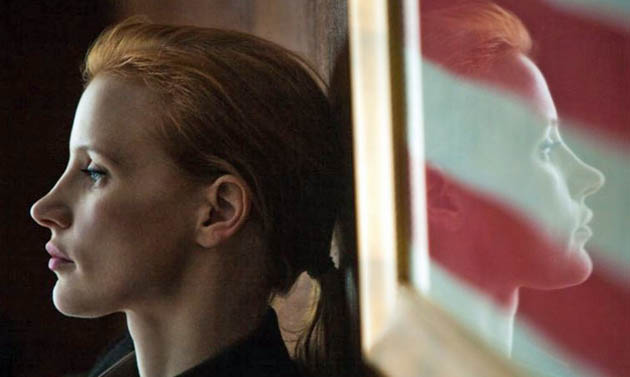
 Zero Dark Thirty with Jessica Chastain. Kathryn Bigelow’s thriller Zero Dark Thirty, about the hunt for – and eventual assassination of – Osama bin Laden, has already stirred quite a bit of controversy even though it has yet to open in the U.S. Whether or not the Barack Obama administration shared top-secret information with director Kathryn Bigelow and screenwriter Mark Boal, Zero Dark Thirty was the New York Film Critics’ Best Picture of 2012. Besides, the NYFCC selected Bigelow as Best Director and singled out the work of cinematographer Greig Fraser.

New York Film Critics Awards 2012: Kathryn Bigelow’s controversial political thriller Zero Dark Thirty tops
Notwithstanding some U.S. Republicans’ accusations that the Barack Obama administration revealed top-secret information to director Kathryn Bigelow and screenwriter Mark Boal, the New York Film Critics Circle (NYFCC) has chosen the political thriller Zero Dark Thirty, about the hunt for and eventual assassination of Osama bin Laden, as the Best Picture of 2012. Zero Dark Thirty also earned honors for its director and for cinematographer Greig Fraser.
Bigelow had previously received NYFCC recognition three years ago for another movie in which the U.S. government’s so-called “war on terror” plays a role, The Hurt Locker. The widely acclaimed Iraq War drama went on to win the Best Picture and Best Director Academy Awards as well.
Curiously, Greig Fraser’s two other 2012 efforts, the popular Snow White and the Huntsman and the unpopular Killing Them Softly, went unheralded. As a rule, the New York Film Critics list their winners’ multiple “quality” efforts, e.g., last year’s Best Supporting Actress Jessica Chastain was cited for three films: Tate Taylor’s The Help, Terrence Malick’s The Tree of Life, and Jeff Nichols’ Take Shelter.
But the biggest surprise at this year’s NYFCC Awards was their Best Actress pick: Rachel Weisz, for her work in Terence Davies’ little-seen drama The Deep Blue Sea. More on that further below.
Zero Dark Thirty cast
Besides Jessica Chastain as a dogged CIA analyst, the Zero Dark Thirty cast includes Jason Clarke, Chris Pratt, Joel Edgerton, Kyle Chandler, Mark Strong, Jennifer Ehle, Edgar Ramírez, Mark Duplass, and James Gandolfini.
Also: Stephen Dillane, Taylor Kinney, Callan Mulvey, Nash Edgerton, Frank Grillo, Aron Eastwood, Christopher Stanley, Simon Abkarian, Wahab Sheikh, and Jeremy Strong.
Zero Dark Thirty opens domestically on Dec. 19.
See the full list of the 2012 New York Film Critics winners further below. See further below our – mostly off-target – NYFCC Awards predictions & two 2012 Osama bin Laden movies.
‘Lincoln’ fêted while Steven Spielberg once again bypassed
The NYFCC’s other major 2012 winner was Steven Spielberg’s well-received historical drama Lincoln, which collected three awards:
- Best Actor Daniel Day-Lewis for his portrayal of U.S. President Abraham Lincoln.
- Best Supporting Actress Sally Field for her performance as Lincoln’s wife, Mary Todd Lincoln.
- Best Screenplay for Tony Kushner for his adaptation of segments from Doris Kearns Goodwin’s book Team of Rivals: The Political Genius of Abraham Lincoln.
Somewhat strangely, two-time Best Director Oscar winner Steven Spielberg has never topped that particular NYFCC category, even though two of his films, Schindler’s List (1993) and Saving Private Ryan (1998), were given the New York Film Critics’ top prize. The Best Director winners were, respectively, Jane Campion for The Piano and Terrence Malick for another World War II drama, The Thin Red Line.
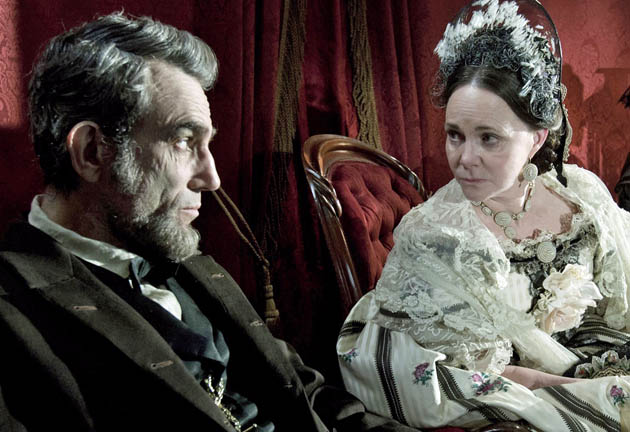 Sally Field and Daniel Day-Lewis in Lincoln. Two-time Best Actress Oscar winner Sally Field has broken a New York Film Critics record while two-time Best Actor Oscar winner Daniel Day-Lewis has tied another one. Named the year’s Best Supporting Actress for her performance as Mary Todd Lincoln in Steven Spielberg’s Lincoln, Field won her second NYFCC award after a 33-year gap – the longest among the NYFCC-winning actresses. (Her first win, as Best Actress, was for Martin Ritt’s Norma Rae, 1979.) As for Day-Lewis, the Abraham Lincoln portrayer has tied Jack Nicholson’s NYFCC Best Actor record: they now have four wins each.
Daniel Day-Lewis ties NYFCC Best Actor record
When the New York Film Critics are enthusiastic about someone, they’re truly, madly, deeply enthusiastic.
With his Lincoln victory, Daniel Day-Lewis has become the second actor ever to win four Best Actor NYFCC Awards. Day-Lewis’ previous wins were for:
- Jim Sheridan’s My Left Foot (1989)
- Martin Scorsese’s Gangs of New York (2002)
- Paul Thomas Anderson’s There Will Be Blood (2007)
If that weren’t all, in 1986 Day-Lewis was also voted Best Supporting Actor for James Ivory’s A Room with a View and Stephen Frears’ My Beautiful Laundrette.
For comparison’s sake: at the Oscars, Daniel Day-Lewis has a mere two Best Actor wins to date, for My Left Foot and There Will Be Blood.
His four-peating NYFCC Best Actor predecessor is Jack Nicholson, who won two additional awards in the supporting category. For the record, Nicholson’s four Best Actor wins were for the following:
- Hal Ashby’s The Last Detail and Roman Polanski’s Chinatown (1974)
- Milos Forman’s One Flew Over the Cuckoo’s Nest (1975)
- John Huston’s Prizzi’s Honor (1985)
- Hector Babenco’s Ironweed, George Miller’s The Witches of Eastwick, and, strangely, James L. Brooks’ Broadcast News (1987), in which Nicholson has a mere cameo
He topped the Best Supporting Actor category for his work in Dennis Hopper’s Easy Rider (1969) and James L. Brooks’ Terms of Endearment (1983).
Since 1990, only two NYFCC Best Actor winners have failed to land a matching Oscar nod:
- David Thewlis for Mike Leigh’s Naked (1993)
- Paul Giamatti for Alexander Payne’s Sideways (2004)
Sally Field: NYFCC ‘victory gap’ record-breaker
Sally Field’s NYFCC win was a surprise, albeit a “safe” one. After all, even though Field is hardly a favorite in the Best Supporting Actress category, when discussing the ever-more mainstream New York Film Critics – notwithstanding their penchant for honoring supporting actresses in indie fare – no win for a well-received Steven Spielberg movie could be considered a truly surprising surprise.
A veteran with about half a century of show business experience (not to mention the fact that her mother, Margaret Field, was also a film actress), Sally Field had one previous New York Film Critics win: Best Actress for Martin Ritt’s Norma Rae (1979), which also earned her a matching Academy Award. (Field won a second Best Actress Oscar for Robert Benton’s Places in the Heart, 1984.)
For curiosity’s sake: Field’s NYFCC “victory gap,” is the longest ever among actresses: 33 years. The previous record holder was Julie Christie, with 32 years between John Schlesinger’s Darling (1965) and Alan Rudolph’s Afterglow (1997), both in the Best Actress category.
In all, Christie retains the record for longest NYFCC “victory span” among actresses, from Darling to her Best Actress award for Sarah Polley’s Away from Her (2007): 42 years.
This awards season’s top Best Supporting Actress candidates are Anne Hathaway for Tom Hooper’s Les Misérables and Amy Adams for Paul Thomas Anderson’s The Master. In fact, Hathaway did get close to winning on the NYFCC’s first ballot, but eventually fell behind after successive voting rounds.

Best Actress Rachel Weisz: NYFCC’s most surprising choice
First-time NYFCC Best Actress winner Rachel Weisz was a – truly – unexpected choice for her star turn in Terence Davies’ little-seen romantic drama The Deep Blue Sea. (Not that much of a surprise: The Bourne Legacy and Dream House went unmentioned.)
Based on Terence Rattigan’s 1952 play, The Deep Blue Sea revolves around the extra-marital affair between the wife of a judge and a Royal Air Force pilot. On the London stage, future Best Supporting Actress Oscar winner Peggy Ashcroft (A Passage to India, 1984) and Kenneth More were the two lovers. Margaret Sullavan starred opposite Jimmy Hanley on Broadway the following year.
In 1955, More reprised his role in the hard-to-find (in good condition) British-made film version directed by Anatole Litvak, and costarring Vivien Leigh as the adulteress and Eric Portman as her husband.
In Terence Davies’ version, Rachel Weisz’s costars are The Avengers’ Tom Hiddleston as the lover and Simon Russell Beale as the husband.
Nearly seven years ago, Rachel Weisz took home a Best Supporting Actress Oscar for Fernando Meirelles’ The Constant Gardener. That awards season, the NYFCC opted for Maria Bello in David Cronenberg’s A History of Violence.
Best Supporting Actor Matthew McConaughey: Oscar chances fuzzy
The New York Film Critics’ moderately surprising Best Supporting Actor winner was Matthew McConaughey for two movies: Steven Soderbergh’s sleeper domestic hit Magic Mike and Richard Linklater’s succès d’estime Bernie.
McConaughey has been an awards season top contender from the get-go, but other favorites in that category include heavyweights Philip Seymour Hoffman for The Master, Tommy Lee Jones for Lincoln, and either Leonardo DiCaprio or Christoph Waltz for Quentin Tarantino’s Django Unchained.
In fact, Matthew McConaughey’s Oscar chances remain iffy. In the last two decades, seven NYFCC Best Supporting Actor winners failed to be shortlisted for the Academy Awards, among them Bill Murray (Rushmore), Harry Belafonte (Kansas City), and last year’s Albert Brooks (Drive).
Two documentary wins: ‘The Central Park Five’ & ‘How to Survive a Plague’
Best known for several elegiac television documentaries about U.S. history, Ken Burns, along with daughter Sarah and David McMahon, directed The Central Park Five, the New York Film Critics’ Best Non-Fiction Film.
The documentary tackles an ugly episode in New York City history, when the city’s police, justice system, and media made a mockery of the democratic process by vilifying one Hispanic and four black teenagers accused of raping a white woman in Central Park in 1989. The men, who, according to reports, had a (way) less than pristine past, were found guilty. More than a decade later, a serial rapist (and DNA match) confessed to the crime.
Another documentary, David France’s How to Survive a Plague, became the first non-fiction film to top the NYFCC’s Best First Feature category since its inception in 1997. The Gotham Award-winning and Spirit Award-nominated effort credits ACT UP and TAG (Treatment Action Group) for strong-arming the United States’ recalcitrant scientific and political establishments – that includes the pharmaceutical industry and government bureaucrats under its thumb – to turn AIDS into a (mostly) manageable disease.
As the year’s most high-profile feature debut, Benh Zeitlin’s Beasts of the Southern Wild had been the odds-on favorite – and the NYFCC’s top initial choice – in the Best First Feature category.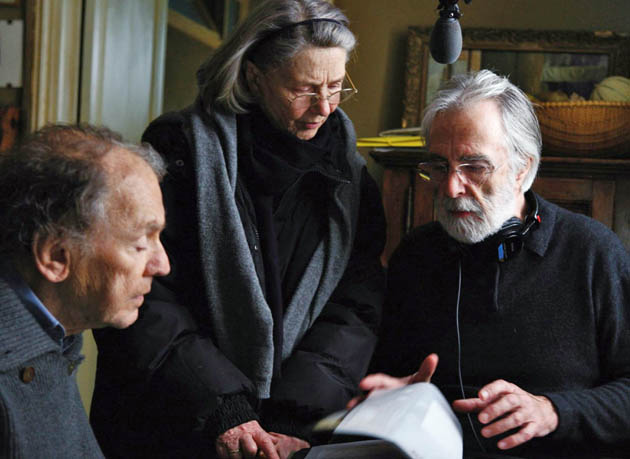 Amour set with Michael Haneke, Emmanuelle Riva, and Jean-Louis Trintignant. In the last three decades or so, the increasingly mainstream New York Film Critics Circle has been reluctant to honor non-English-language films – except, of course, in its Best Foreign Language Film category. In the acting categories, Amour could have changed all that, what with veterans Jean-Louis Trintignant (The Conformist, Three Colors: Red), Emmanuelle Riva (Hiroshima Mon Amour, Three Colors: Blue), and Isabelle Huppert (Entre Nous, Story of Women) as its key cast members. But it didn’t.
Amour tops foreign-language ghetto, box office flop Frankenweenie tops Best Animated Feature
Michael Haneke’s Palme d’Or– and multiple European Film Award-winning French-German-Austrian drama Amour, about an elderly Paris couple (veterans Jean-Louis Trintignant and Emmanuelle Riva) coping with illness and encroaching death, was the NYFCC’s Best Foreign Language Film.
Haneke’s old-age drama will likely earn Academy Award nominations for its screenwriter-director and for leading lady Riva, besides being the odds-on favorite for the Best Foreign Language Film Oscar and in various categories of the French Academy’s Prix César. The New York Film Critics, however, felt that one single non-English-language-category mention for Amour was enough, and that was that.
And finally, the NYFCC’s Best Animated Feature was Tim Burton’s Frankenweenie, a major box office disappointment for the Walt Disney Studios. The Annie Award nominee tells the story of a boy, Victor Frankenstein, who attempts to bring his dead dog back to life. In the voice cast: Charlie Tahan, Catherine O’Hara, Martin Short, Conchata Ferrell, Tom Kenny, Oscar winner Martin Landau (Ed Wood, 1993), and two-time nominee Winona Ryder (The Age of Innocence, 1993; Little Women, 1994).
Last year, the NYFCC opted not to hand out the Best Animated Feature award.
NYFCC-Oscar matches
Four of the 2011 New York Film Critics Circle winners went on to take home Oscars:
- Best Picture The Artist
- Best Foreign Language Film A Separation
- Best Actress Meryl Streep (The Iron Lady)
- Best Director Michel Hazanavicius (The Artist)
The only two NYFCC 2011 winners totally bypassed by the Academy were the aforementioned Albert Brooks (Best Supporting Actor for Drive) and Werner Herzog’s documentary Cave of Forgotten Dreams, which had been submitted for – and bypassed by – the Oscars in 2010.
Even in the Best First Feature category – which has no Oscar match – winning film Margin Call ended up receiving a Best Original Screenplay Oscar nod for director/screenwriter J.C. Chandor.
Immediately below is the list of this year’s NYFCC winners.
New York Film Critics winners
Best Picture: Zero Dark Thirty.
Best Foreign Language Film: Amour
Best Actress: Rachel Weisz, The Deep Blue Sea
Best Actor: Daniel Day-Lewis, Lincoln
Best Supporting Actress: Sally Field, Lincoln
Best Supporting Actor: Matthew McConaughey, Magic Mike & Bernie
Best Director: Kathryn Bigelow, Zero Dark Thirty
Best Screenplay: Tony Kushner, Lincoln
Best Cinematography: Greig Fraser, Zero Dark Thirty
Best Non-Fiction Film: The Central Park Five
Best Animated Feature: Frankenweenie.
Best First Feature: How to Survive a Plague.

Amy Adams in The Master. Inspired by the life and times of Scientology founder L. Ron Hubbard, Paul Thomas Anderson’s The Master had been touted as one of 2012’s top awards season/Oscar contenders until it proved itself a domestic box office misfire in early fall. Even so, The Master is a likely Academy Award contender at least in the acting categories thanks to the widely praised work of Joaquin Phoenix, Amy Adams, and Philip Seymour Hoffman – and thanks to the well-oiled Weinstein Company awards season machinery. Update: Wrong prediction.
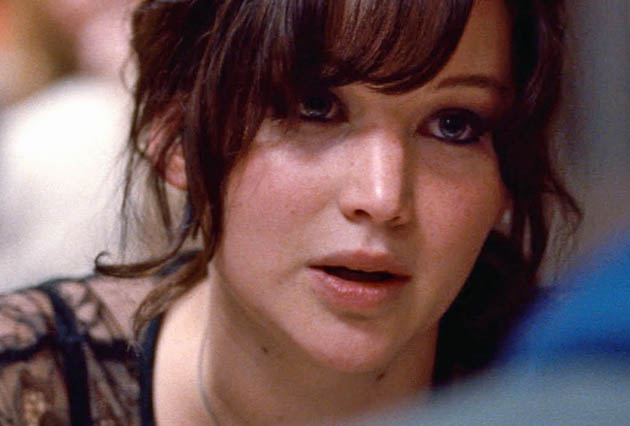 Jennifer Lawrence in Silver Linings Playbook. About two years after her well-received performance in Debra Granik’s 2010 indie drama Winter’s Bone, Jennifer Lawrence has become a major star as a result of her being cast as The Hunger Games’ fearless heroine Katniss Everdeen. Besides, moviegoers have also been able to check out the now world-renowned young actress as Bradley Cooper’s dance partner and eventual romantic interest in David O. Russell’s Silver Linings Playbook. Update: Wrong prediction.
NYFCC: Aversion to foreign-language fare
Could the New York Film Critics Circle go “foreign-language” this year in their choices for any of the acting categories?
In spite of Amour, that’s, to put it mildly, unlikely.
The last winners in the acting categories for a performance in a non-English-language film were:
- Best Actress Norma Aleandro for Luis Puenzo’s The Official Story (1985).
- Best Supporting Actress Gong Li for Chen Kaige’s Farewell My Concubine (1993).
- Best Supporting Actor Charles Boyer for Alain Resnais’ Stavisky (1974).*
- Best Actor … no one. Not a single one.
Ironically, Trintignant, Riva, and Huppert have a better shot at an Oscar nomination than at the NYFCC Awards.
* Best Supporting Actor NYFCC winner Christoph Waltz speaks various languages in Quentin Tarantino’s Inglourious Basterds (2009), but that’s still an English-language movie made by a Hollywood filmmaker.
Of note, no filmmaker has won an NYFCC Award for a non-English-language film since Ingmar Bergman for Fanny and Alexander back in 1983. (Michel Hazanavicius doesn’t count. True, The Artist is a French-Belgian production, but the Hollywood-set, mostly silent comedy-drama’s one single line of dialogue is in English.)
“New York Film Critics Awards 2012” notes
New York Film Critics Circle website.
Jessica Chastain Zero Dark Thirty image: Columbia Pictures.
Daniel Day-Lewis and Sally Field Lincoln image: DreamWorks Pictures / Walt Disney Studios | 20th Century Fox.
Rachel Weisz The Deep Blue Sea image: Music Box Films.
Image of Jean-Louis Trintignant, Emmanuelle Riva, and Michael Haneke on the Amour set: Sony Pictures Classics.
Amy Adams The Master image: The Weinstein Company.
Jennifer Lawrence Silver Linings Playbook image: The Weinstein Company.
*last modified in June 2025.